






































































































































































Table of Contents
Toggle22 Natural Ways to Manage Anxiety: What the Evidence Really Says
Author: RVLNSV PRASAD
Updated On: October 2026
About Us
Author Bio
Editorial Policy
Contact Us
Introduction
Anxiety can make an ordinary day feel much harder than it should.
When worry keeps returning to the same problem, your body may remain tense, making it harder to concentrate, relax, or fall asleep. You may also notice physical sensations such as a tight feeling in your chest or tense muscles.
Sometimes anxiety is a normal response to a stressful situation. At other times, it becomes persistent and begins interfering with work, relationships, sleep, or everyday activities.
That difference matters.
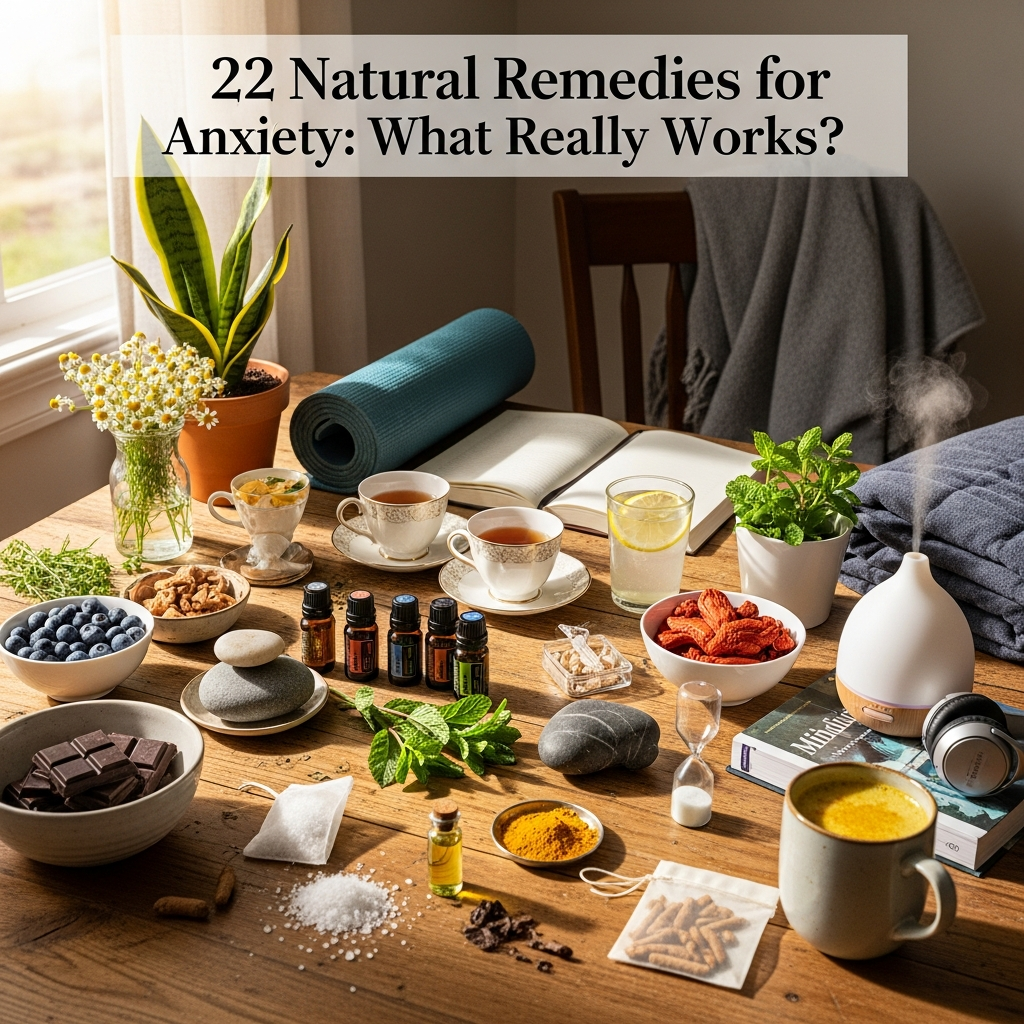
The goal of this guide is not to promise a natural cure for anxiety. Instead, it explains 22 natural ways to manage anxiety that can be used as practical self-care strategies, while clearly separating everyday coping techniques from treatments for anxiety disorders.
The National Institute of Mental Health explains that healthy habits such as exercise, adequate sleep, healthy meals, relaxation techniques, mindfulness, and social connection can support mental health. It also emphasizes that healthy habits do not replace professional treatment when an anxiety disorder requires care. National Institute of Mental Health: Caring for Your Mental Health
Recent research also gives us a more nuanced picture. A 2026 systematic review and meta-analysis involving 37 randomized trials and 3,199 participants found that certain mindfulness-based interventions reduced anxiety symptoms, although the researchers noted that many studies had some concerns about risk of bias and that more research is needed.
Similarly, a 2026 umbrella review of exercise research found evidence that exercise can improve anxiety symptoms across different populations. 2026 PubMed: Exercise and anxiety systematic umbrella review
So instead of asking, “What is the one best natural remedy for anxiety?” a better question is
“Which practical strategies fit the type of anxiety I am experiencing, and when should I seek professional help?”
Quick Answer: What Are the Best Natural Ways to Manage Anxiety?
The most practical evidence-informed strategies include:
- Slow breathing
- Regular walking
- Other regular physical activity
- Mindfulness
- Meditation
- Progressive muscle relaxation
- Better sleep habits
- Reducing excess caffeine
- Being cautious with alcohol
- Regular balanced meals
- Spending time with supportive people
- Journaling
- Grounding exercises
- A predictable daily routine
- Reducing unnecessary digital stimulation
- Spending time outdoors
- Relaxing hobbies
- Gratitude practice
- Gentle stretching or yoga
- A calming evening routine
- Using herbal products carefully
- Professional support when anxiety becomes difficult to manage
These strategies are not equally supported by research.
Exercise, sleep, mindfulness, and relaxation have considerably more evidence behind them than many supplements marketed as “natural anxiety cures.” The National Center for Complementary and Integrative Health notes that some complementary approaches may reduce anxiety symptoms, but evidence varies considerably and they should not be assumed to treat anxiety disorders. NCCIH: Anxiety and Complementary Health Approaches
Key Takeaways
- Occasional anxiety is a normal human response to stress.
- Persistent anxiety that interferes with daily life deserves professional attention.
- No single natural remedy works for everyone.
- Exercise has meaningful evidence for reducing anxiety symptoms.
- Mindfulness and meditation may help, but they should not be presented as replacements for evidence-based treatment.
- Slow breathing can be a useful short-term calming technique.
- Sleep and anxiety can influence each other.
- Some people are particularly sensitive to caffeine.
- Alcohol can worsen sleep and may aggravate anxiety for some people.
- Herbal supplements require more caution than ordinary foods or teas.
- “Natural” does not automatically mean safe.
- Small habits are often easier to maintain than complicated wellness programs.
- A natural strategy should support well-being, not delay needed treatment.
Understanding Anxiety in Simple Terms
Anxiety is the body’s response to perceived threat, uncertainty, or stress.
Your brain can detect something it considers important or potentially dangerous. That can activate physical and emotional responses.
You may notice:
- faster heartbeat
- muscle tension
- sweating
- rapid breathing
- stomach discomfort
- racing thoughts
- restlessness
- difficulty concentrating
- a strong desire to escape or avoid something
These responses can be useful when there is an actual immediate danger.
The problem is that anxiety can also become persistent when the perceived threat is uncertain, exaggerated, or repeatedly triggered.
The National Institute of Mental Health describes generalized anxiety disorder as excessive anxiety and worry that is difficult to control and can interfere with everyday life. NIMH: Generalized Anxiety Disorder
That is why this article uses the phrase “manage anxiety” rather than promising to “cure” anxiety naturally.
Anxiety vs. an Anxiety Disorder
Not every anxious feeling means that someone has an anxiety disorder.
Occasional anxiety
It may appear before:
- an exam
- a job interview
- public speaking
- an important meeting
- a difficult conversation
- a major life change
It may decrease when the situation passes.
Possible anxiety disorder
Anxiety may need professional assessment when it becomes persistent, difficult to control, or disruptive.
Warning signs can include:
- difficulty completing normal tasks
- persistent sleep problems
- avoidance of everyday activities
- frequent panic symptoms
- significant concentration problems
- anxiety that interferes with relationships or work
NIMH recommends seeking professional help when symptoms become severe or interfere with normal activities. NIMH: My Mental Health—Do I Need Help?
The Evidence Ladder: Not Every “Natural Remedy” Is Equal
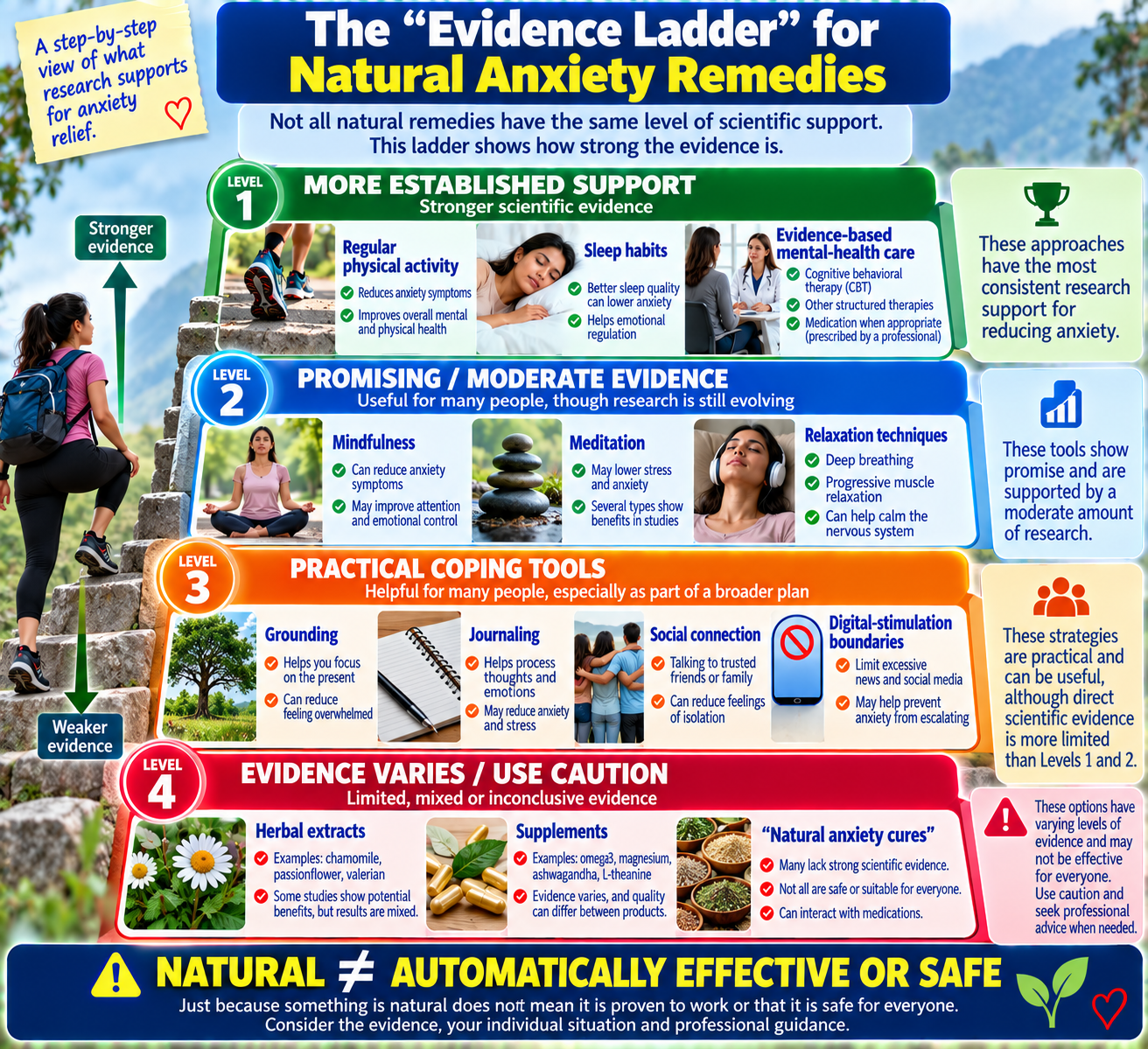
One of the biggest problems with online anxiety articles is that every suggestion is often presented as equally effective.
It isn’t.
| Strategy | Evidence/usefulness | How to think about it |
|---|---|---|
| Regular exercise | Stronger evidence | Useful lifestyle strategy |
| Mindfulness | Moderate evidence | Helpful for some people |
| Meditation | Moderate evidence | Supportive, not automatically a treatment |
| Relaxation techniques | Supportive evidence | Useful coping tool |
| Sleep improvement | Important | Supports overall mental health |
| Caffeine reduction | Useful for sensitive people | Particularly relevant with jitters |
| Social connection | Important | Supports emotional well-being |
| Journaling | Practical but less established | Useful self-reflection tool |
| Grounding | Practical coping strategy | Useful during distress |
| Herbal teas | Evidence varies. | Often more ritual than treatment |
| Herbal extracts | Variable | Safety and evidence must be checked. |
| Supplements | Highly variable | Do not assume effectiveness. |
NCCIH specifically states that complementary approaches vary in evidence and that some have not been proven effective for treating anxiety disorders. NCCIH: What the Science Says About Anxiety and Complementary Approaches
1. Try Slow Breathing
Breathing is one of the easiest anxiety-management techniques to practice because you do not need equipment.
When anxious, some people begin breathing rapidly or shallowly. Deliberately slowing the breath may help reduce physical arousal and create a brief pause before reacting.
A simple approach is
Inhale gently → exhale slowly → repeat for several minutes.
Do not force extremely deep breaths.
A comfortable, slow breathing pattern is usually more useful than trying to take the biggest possible breath.
NCCIH notes that research on diaphragmatic breathing has provided preliminary evidence for reducing stress, while breathing exercises are also used within broader mental health care. NCCIH: Relaxation Techniques
2. Walk Regularly
Walking is one of the most practical natural strategies for anxiety.
It requires little equipment, can be done alone or with someone, and can be adapted to different fitness levels.
A short walk can also create separation from a stressful environment.
The evidence extends beyond walking alone. A 2026 umbrella review of meta-analyses of randomized trials found that exercise interventions can reduce symptoms of anxiety and depression across populations. 2026 Exercise and Anxiety Review
You do not have to turn every walk into a workout.
For someone with a busy schedule, even a short walk can be a realistic starting point.
3. Increase Regular Physical Activity
Walking is only one option.
Depending on your health and fitness level, useful activities may include:
- cycling
- swimming
- dancing
- resistance exercise
- yoga
- recreational sports
- brisk walking
The important point is consistency.
NIMH includes regular exercise among practical self-care strategies for mental health and notes that small amounts of activity can add up. NIMH: Caring for Your Mental Health
4. Practice Mindfulness
Mindfulness involves deliberately paying attention to the present moment rather than automatically following every thought.
A simple practice can involve noticing:
- breathing
- body sensations
- sounds
- thoughts
- emotions
You do not need to force your mind to become completely empty.
Instead, notice when your attention wanders and gently return it.
A 2026 systematic review and meta-analysis found significant reductions in anxiety symptoms from second-generation mindfulness interventions, although the researchers emphasized limitations in the evidence base.
NCCIH also reports that mindfulness-based practices may provide small to modest benefits for anxiety-related symptoms. NCCIH: Anxiety and Complementary Health Approaches
5. Use Meditation as a Skill, Not a Cure-All
Meditation can be useful when anxiety involves repetitive thinking.
Try five minutes:
Notice → breathe → observe the thought → return attention.
The objective is not to eliminate every anxious thought.
It is to become less automatically controlled by each thought.
Some meditation-based interventions have promising evidence for anxiety symptoms, but meditation should not be marketed as a substitute for treatment of an anxiety disorder. NCCIH: Mindfulness and Anxiety Evidence
6. Practice Progressive Muscle Relaxation
Anxiety can produce physical tension.
Progressive muscle relaxation uses deliberate tension followed by relaxation of different muscle groups.
You might begin with:
- hands
- shoulders
- jaw
- abdomen
- legs
The technique helps you notice the difference between tension and relaxation.
NCCIH describes relaxation techniques as potentially useful for anxiety, while also noting that evidence-based psychotherapy can be more effective for some anxiety disorders. NCCIH: Relaxation Techniques
7. Protect Your Sleep
Poor sleep and anxiety can reinforce each other.
You may worry because you cannot sleep, then become more anxious because you are tired the following day.
Create a simple sleep routine:
- keep a reasonably consistent bedtime
- reduce stimulating activities before bed
- make the bedroom comfortable
- avoid using the bed as a place for prolonged work
- give yourself enough time to sleep
NIMH recommends making sleep a priority and keeping a consistent schedule as part of mental-health self-care. NIMH: Caring for Your Mental Health
8. Reduce Caffeine if It Makes You Jittery
Caffeine does not affect everyone in the same way.
Some people can drink coffee without noticeable anxiety.
Others develop:
- shakiness
- racing heart
- restlessness
- sleep problems
- increased anxious feelings
A 2026 systematic review of 27 studies found evidence of a dose-dependent anxiety-provoking effect of caffeine, although responses differed between individuals and habitual caffeine users. 2026 PubMed: Caffeine and Anxiety Systematic Review
You do not necessarily need to eliminate caffeine.
Try observing your own response.
If anxiety or sleep improves after reducing caffeine, that is useful information.
9. Be Careful With Alcohol
Alcohol can feel relaxing temporarily.
That does not make it a good anxiety treatment.
Alcohol can disrupt sleep, and some people experience increased anxiety as its effects wear off.
NIMH specifically recommends paying attention to how alcohol affects your mood and well-being. NIMH: Caring for Your Mental Health
If alcohol has become your primary method of coping with anxiety, professional support is more appropriate than simply trying another natural remedy.
10. Eat Regular, Balanced Meals
There is no special “anxiety diet.”
However, regular nutritious meals can support general physical and mental well-being.
Build meals around combinations such as
- vegetables
- fruits
- whole grains
- legumes
- nuts and seeds
- appropriate protein sources
Avoid turning anxiety management into another restrictive diet.
NIMH recommends eating healthy, regular meals and paying attention to caffeine and alcohol as part of mental health self-care. NIMH: Caring for Your Mental Health
11. Stay Connected With Supportive People
Anxiety can make people withdraw.
Unfortunately, isolation can also leave you with more time to ruminate.
A short conversation with someone you trust can sometimes interrupt that cycle.
You do not need to explain everything.
A simple message such as
“I am having a stressful day. Can we talk for a few minutes?”
may be enough.
NIMH recommends staying connected with friends or family who can provide emotional support and practical help. NIMH: Caring for Your Mental Health
12. Use a Simple Worry Journal
Writing can help turn vague anxiety into something more specific.
Try three columns:
| What am I worried about? | What can I control? | What is my next useful action? |
|---|---|---|
| Work deadline | My preparation | Work for 20 minutes. |
| Health uncertainty | Making an appointment | Call the clinic. |
| Future finances | Today’s spending | Review expenses. |
This is not a medical treatment.
It is a practical organizational tool.
The goal is to move from “Everything is going wrong” toward “What can I actually do next?”
13. Try Grounding When Your Mind Feels Overwhelmed
Grounding redirects attention toward the immediate environment.
One commonly used approach is
5 things you can see
4 things you can feel
3 things you can hear
2 things you can smell
1 thing you can taste
The purpose is not to prove that anxiety is imaginary.
It is to redirect attention when your thoughts have become overwhelming.
If grounding makes you feel more distressed, stop and choose another technique.
14. Create a Predictable Daily Routine
An unpredictable day can create many small decisions.
A simple routine can reduce some of that mental load.
Your routine might include:
Morning: wake, wash, breakfast, brief movement
Afternoon: work, meal, short movement break
Evening: lighter activity, dinner, reduced stimulation
Night: relaxation, reading, sleep
NIMH notes that setting goals and priorities, deciding what needs attention now and what can wait, and reducing overload can support mental health. NIMH: Caring for Your Mental Health
15. Reduce Unnecessary Digital Stimulation
You do not need to delete every social media app.
Instead, identify what repeatedly activates your anxiety.
It could be:
- constant news alerts
- social media arguments
- work messages late at night
- repeated health searches
- checking the same information over and over
Try creating specific times to check messages and news rather than responding to every notification immediately.
This is especially useful for people whose anxiety is driven by constant uncertainty.
16. Spend Time Outdoors
Outdoor time can be a simple way to create a break from screens and indoor routines.
You might:
- walk through a park
- sit outside
- garden
- walk around your neighborhood
- have tea outdoors
- combine daylight with a short walk
Do not present outdoor exposure as a cure for anxiety.
Think of it as a low-cost environmental change that can support relaxation, movement, and routine.
17. Use Relaxing Hobbies
A hobby gives your attention somewhere to go.
Examples include:
- gardening
- reading
- drawing
- music
- cooking
- photography
- crafts
- gentle gardening
- walking
- puzzles
Choose something because you enjoy it, not because an influencer says it “balances hormones.”
NIMH recommends making time for low-stress activities and hobbies that you enjoy. NIMH: Caring for Your Mental Health
18. Practice Gratitude Without Forcing Positivity
Gratitude should not become:
“I am anxious, but I must pretend everything is wonderful.”
That can feel invalidating.
Instead, write down one or two things that are genuinely going well.
For example:
- “I had a good conversation with my brother.”
- “I completed an important task.”
- “I enjoyed my evening walk.”
NIMH includes gratitude among practical self-care strategies. NIMH: Caring for Your Mental Health
19. Try Gentle Stretching or Yoga
Gentle movement can be useful when anxiety is accompanied by physical tension.
You might try:
- neck mobility
- shoulder rolls
- gentle forward folds
- slow standing stretches
- beginner yoga
- relaxed mobility exercises
Yoga has been studied for anxiety, although NCCIH notes that more high-quality research is needed to determine its effectiveness specifically for anxiety disorders. NCCIH: Anxiety and Complementary Health Approaches
If movement causes pain, dizziness, or other concerning symptoms, stop and seek appropriate advice.
20. Create a Low-Stimulation Evening
Many people spend the final hour of the day consuming stimulating information.
Try replacing some of that time with:
- reading
- gentle stretching
- quiet music
- a warm shower
- slow breathing
- preparing tomorrow’s priorities
- a calm conversation
The purpose is not to create a perfect bedtime ritual.
It is to make the transition from high stimulation to rest easier.
21. Be Careful With Herbal Remedies and Supplements
This is where many online anxiety articles become misleading.
A plant can contain biologically active compounds.
That does not automatically make it effective or safe.
Chamomile
NCCIH reports that some preliminary studies suggest chamomile supplements may help generalized anxiety disorder, but the evidence is not conclusive. Chamomile can also cause allergic reactions and may interact with certain medicines. NCCIH: Chamomile
A cup of chamomile tea should not automatically be treated as equivalent to a concentrated chamomile extract used in a clinical study.
Lavender
Some lavender preparations have been studied for anxiety. NCCIH notes that oral lavender oil products may have potential benefits, but more high-quality evidence is needed. NCCIH: Lavender
Ashwagandha
Ashwagandha is particularly relevant for Indian readers because it is widely promoted for stress and anxiety.
But marketing claims have moved faster than the evidence.
NCCIH states that some research suggests certain preparations may help stress or insomnia, while evidence regarding anxiety remains unclear. It also notes possible side effects and rare reports of liver injury. NCCIH: Ashwagandha
Kava
Kava deserves special caution.
Although some research suggests possible anxiety benefits, NCCIH notes that kava supplements have been linked with severe liver injury. NCCIH: Anxiety and Complementary Health Approaches
Therefore, I would not recommend kava as an easy home remedy.
What About Magnesium?
Magnesium is an essential mineral, and magnesium-rich foods can be part of a healthy diet.
But that is different from claiming that magnesium supplements are a proven treatment for anxiety.
If you are considering a supplement, especially if you take medication or have a medical condition, discuss it with a healthcare professional.
NCCIH explains that supplements can interact with medicines and alter their effects or side effects. NCCIH: How Supplements Can Interact With Medicines
22. Know When Professional Support Is the Natural Next Step
This may seem strange in an article about natural anxiety strategies.
It is actually one of the most important points.
If anxiety is persistent and interfering with your life, seeking professional care is not a failure of natural self-care.
It is responsible health management.
For generalized anxiety disorder, NIMH explains that evidence-based treatment can include psychotherapy, medication, or both. Cognitive behavioral therapy is a well-studied psychotherapy option. NIMH: Generalized Anxiety Disorder Treatment
Natural strategies can be used alongside appropriate treatment when suitable.
They should not be used as a reason to delay care.
A Unique People-First Strategy: Match the Tool to the Problem
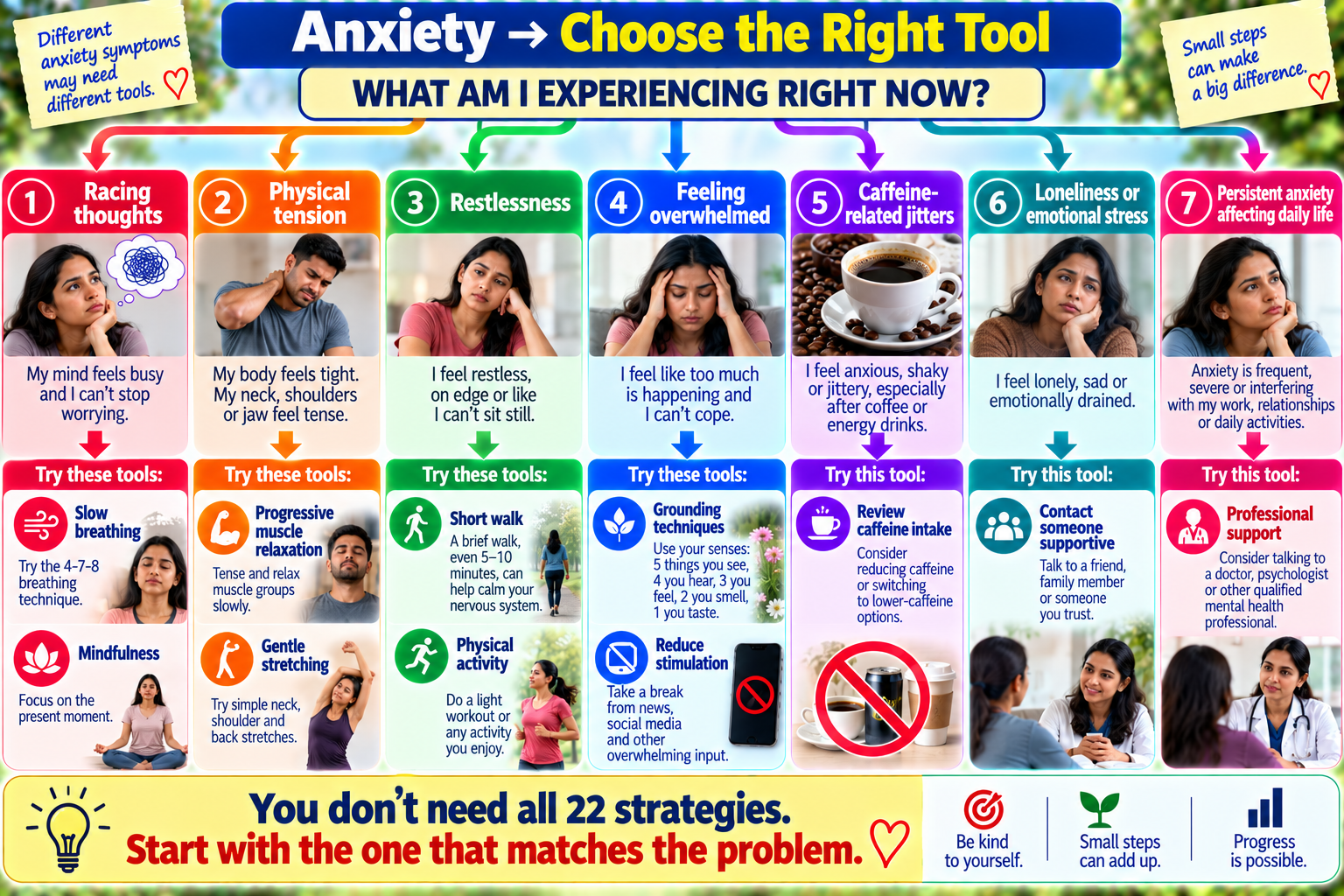
Instead of asking:
“Which remedy is best?”
Ask:
“What exactly am I experiencing right now?”
| What you notice | First strategy to try |
|---|---|
| Racing thoughts | Slow breathing + mindfulness |
| Physical tension | Progressive muscle relaxation |
| Restlessness | Short walk |
| Caffeine-related jitters | Reduce caffeine. |
| Trouble winding down | Low-stimulation evening |
| Repetitive worries | Worry journal |
| Feeling overwhelmed | Grounding |
| Loneliness | Contact someone supportive. |
| Poor sleep | Consistent sleep routine |
| Too many tasks | Set priorities. |
| Screen-related anxiety | Notification boundaries |
| Stress after work | Transition routine |
| Persistent anxiety affecting life | Professional evaluation |
This approach is more useful than blindly trying all 22 strategies.
You do not need all of them.
You need the ones that fit your situation.
The 2-Minute Anxiety Reset
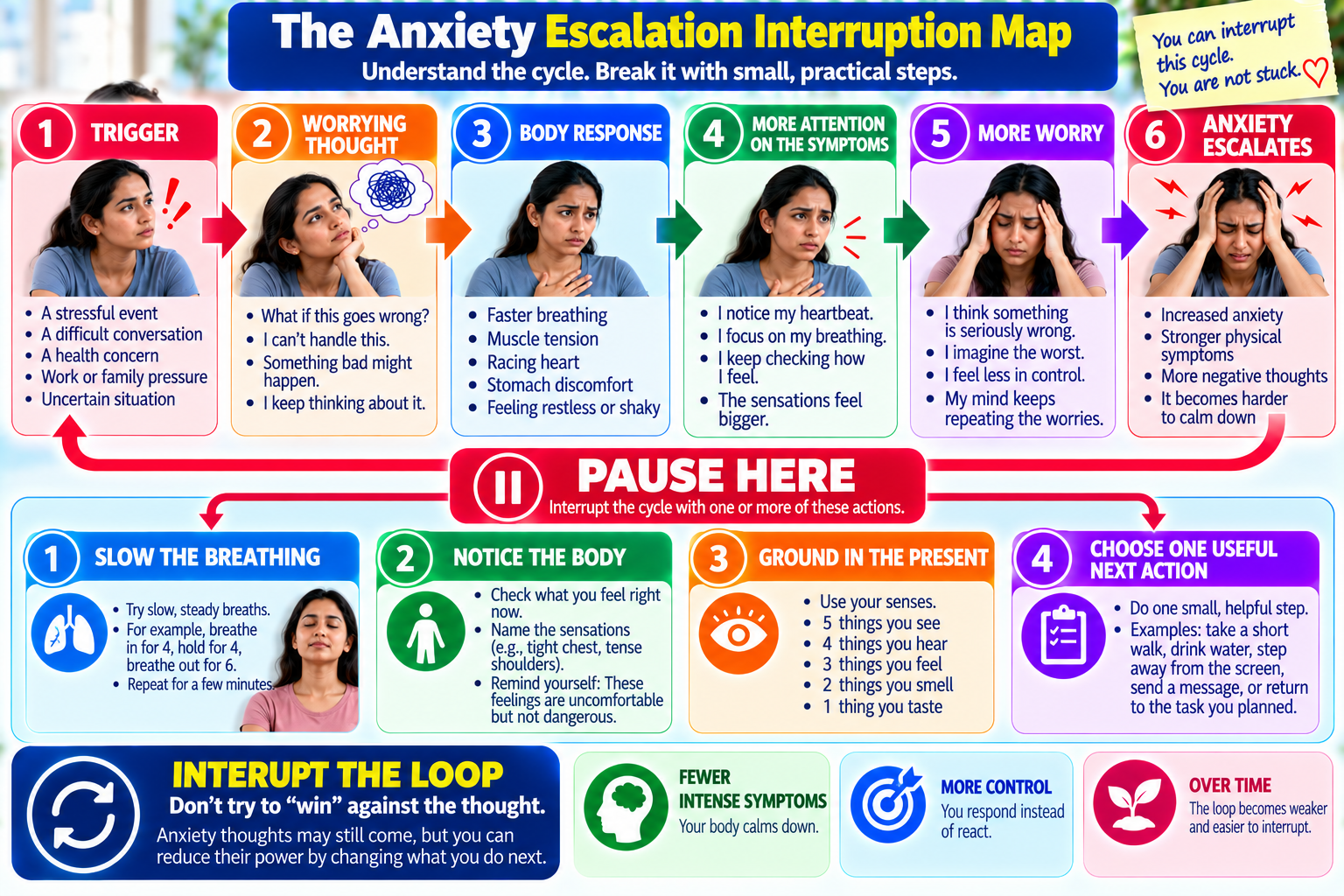
Here is another simple strategy that can be used almost anywhere.
First 30 seconds: Name it.
Ask:
“What am I feeling?”
Perhaps it is fear, worry, frustration, embarrassment, or uncertainty.
Next 30 seconds: Locate it.
Notice where the feeling appears.
Is there tension in your
- jaw?
- shoulders?
- chest?
- stomach?
- hands?
Next 30 seconds: Slow down
Allow your breathing to become comfortable and unforced.
Final 30 seconds: Choose one useful action.
Ask:
“What can I do next that is helpful rather than harmful?”
Maybe the answer is
- walk
- call someone
- stop reading alarming information
- write down the problem
- prepare for tomorrow
- rest
- schedule professional support
The goal is not to make anxiety disappear within two minutes. Instead, the aim is to interrupt the automatic cycle of escalation and create a little space to respond more calmly.
Common Mistakes When Using Natural Anxiety Remedies
Mistake 1: Treating Every Natural Remedy as Proven
Evidence varies enormously between exercise, mindfulness, herbal extracts, and supplements.
Mistake 2: Replacing Treatment With Self-Care
Self-care can support treatment, but it does not automatically replace therapy or medication.
NIMH specifically states that healthy habits alone cannot replace treatment for anxiety disorders. NIMH: Generalized Anxiety Disorder
Mistake 3: Starting Ten Habits at Once
If you suddenly begin meditation, fasting, yoga, supplements, cold showers, a new diet, and an intense exercise program, it becomes difficult to know what actually helps.
Start with one or two changes.
Mistake 4: Using Supplements Without Checking Interactions
Herbal products can interact with medicines.
Mistake 5: Trying to Eliminate Every Anxious Thought
The goal is not necessarily to have a completely empty mind.
Learning how to respond differently to thoughts can be more realistic.
Mistake 6: Measuring Success Only by “Feeling Calm”
Sometimes the first improvement is behavioral.
You may still feel anxious but complete the task anyway.
That is meaningful progress.
My Personal Experience With Anxiety-Management Habits
I have found that simple routines are easier to continue than complicated wellness programs.
When a stressful day becomes mentally crowded, a short walk, stepping away from the screen, slowing the breathing, and returning attention to one task can feel more practical than trying to completely change the day.
I also learned that not every technique works equally well every time.
Some days movement feels helpful.
On other days, quiet breathing or writing down worries feels more appropriate.
That experience shaped the approach used in this article: choose the tool according to the problem instead of forcing one remedy on every situation.
Personal experience should not be treated as medical evidence, however. Individual responses differ, and persistent anxiety deserves appropriate professional assessment.
Latest Research Developments: What Has Changed?
Exercise Has Stronger Evidence Than Many “Natural Remedies”
The 2026 umbrella review of exercise and anxiety synthesized evidence from meta-analyses of randomized controlled trials across different populations. Its findings add to the evidence that exercise can improve anxiety symptoms. 2026 Exercise Umbrella Review
The practical lesson is important.
You do not need an unfamiliar supplement to begin.
Regular physical activity remains one of the most accessible options.
Mindfulness Research Is Becoming More Detailed
A 2026 systematic review included 37 randomized trials with 3,199 participants examining second-generation mindfulness interventions for anxiety. The analysis found significant reductions in anxiety symptoms, but many studies were rated as having “some concerns” regarding risk of bias.
That means the result is encouraging without justifying the statement:
“Meditation cures anxiety.”
Good health writing should preserve both sides of the evidence.
Caffeine Research Is Becoming More Specific
The 2026 systematic review of 27 studies found a dose-dependent anxiety-provoking effect from caffeine, while also noting differences between individuals and habitual caffeine users. 2026 Caffeine and Anxiety Review
This supports a personalized approach.
If caffeine makes you jittery or interferes with sleep, reducing it may be worthwhile.
If you tolerate a moderate amount without problems, there is no need to assume that all caffeine is harmful.
Researchers Continue to Separate Symptoms From Disorders
This distinction is becoming increasingly important.
Some complementary techniques may help people cope with everyday anxiety or reduce anxiety symptoms.
That does not automatically mean they are proven treatments for diagnosed anxiety disorders.
NCCIH explicitly makes this distinction in its anxiety guidance. NCCIH: Anxiety and Complementary Health Approaches
A Simple 7-Day Natural Anxiety-Management Plan
| Day | One practical action |
|---|---|
| Day 1 | Take a 10–20 minute comfortable walk. |
| Day 2 | Reduce one source of unnecessary digital stimulation. |
| Day 3 | Practice slow breathing for five minutes. |
| Day 4 | Add a short mindfulness practice |
| Day 5 | Review your caffeine intake. |
| Day 6 | Contact someone supportive. |
| Day 7 | Review which habit actually helped. |
Do not try to complete all 22 strategies.
The purpose of this plan is to discover which small changes fit your life.
When You Should Seek Professional Help
Natural self-care may be appropriate for mild, occasional stress.
Professional help becomes more important when anxiety:
- persists
- becomes difficult to control
- interferes with work
- disrupts relationships
- affects sleep significantly
- causes repeated panic attacks
- leads to major avoidance
- makes everyday tasks difficult
NIMH recommends professional help when symptoms interfere with daily life, and evidence-based treatments include psychotherapy and, when appropriate, medication. NIMH: Generalized Anxiety Disorder
If you are experiencing thoughts of suicide or self-harm, seek immediate emergency or crisis support rather than relying on self-care strategies. NIMH provides urgent mental health guidance and crisis resources. NIMH: Mental Health Crisis Guidance
Frequently Asked Questions
Can natural remedies really help anxiety?
Some lifestyle and complementary strategies can help reduce anxiety symptoms or improve coping. Evidence varies considerably, and natural approaches should not automatically be considered treatments for anxiety disorders. NCCIH: Anxiety and Complementary Health Approaches
What is the best natural way to calm anxiety quickly?
Slow breathing, grounding, a short walk, and reducing immediate stimulation may help some people manage an episode of anxiety. There is no single technique that works for everyone.
Can walking reduce anxiety?
Regular physical activity, including walking, can help reduce anxiety symptoms. A 2026 umbrella review found evidence supporting exercise for anxiety reduction. PubMed: 2026 Exercise and Anxiety Review
Does caffeine make anxiety worse?
It can, particularly in people who are sensitive to caffeine. A 2026 systematic review found evidence of a dose-dependent anxiety-provoking effect, although individual responses differ. PubMed: Caffeine and Anxiety Systematic Review
Can meditation help anxiety?
Meditation and mindfulness may reduce anxiety symptoms. Recent research is encouraging, but the evidence varies and meditation should not automatically replace evidence-based treatment.
Is chamomile good for anxiety?
Some preliminary studies suggest chamomile extract may help generalized anxiety disorder, but NCCIH says the evidence is not conclusive. Tea and concentrated extracts should not be treated as equivalent. NCCIH: Chamomile
Is ashwagandha good for anxiety?
Evidence regarding ashwagandha for anxiety remains unclear. NCCIH notes that some preparations may help stress, but there are also safety concerns, including rare reports of liver injury. NCCIH: Ashwagandha
Can I manage anxiety without medication?
Some people with mild or situational anxiety may benefit from self-care and lifestyle changes. However, people with anxiety disorders may need psychotherapy, medication, or both. NIMH: Generalized Anxiety Disorder
How long does natural anxiety relief take?
There is no universal timeline. A breathing exercise may help someone feel calmer during a stressful moment, while improvements associated with regular exercise, mindfulness, or better sleep may require consistent practice.
Are natural anxiety remedies safe for everyone?
No. Safety depends on the person’s age, health conditions, pregnancy status, medications, and supplements. NCCIH specifically warns that complementary products can have side effects and interactions. NCCIH: Anxiety and Complementary Health Approaches
Author Note
This article was written by RVLNSV PRASAD to explain practical, evidence-informed approaches to anxiety management in simple language.
The purpose is not to promote a particular supplement, therapy, or lifestyle program.
The focus is on helping readers understand which self-care strategies have reasonable evidence, which claims remain uncertain, and when professional care is appropriate.
Personal experience is included as a personal perspective and should not be interpreted as clinical evidence or individualized medical advice.
Medical Disclaimer
This article is for educational purposes only and does not diagnose, treat, or cure anxiety disorders or any other mental health condition.
Natural strategies may support well-being and coping, but they should not replace professional assessment or evidence-based treatment when anxiety is persistent, severe, or interfering with everyday life.
If you take prescription medicines, have a medical condition, are pregnant or breastfeeding, or are considering an herbal supplement, discuss the product with a qualified healthcare professional before using it.
Do not stop prescribed psychiatric medication because of information in this article.
Fitness Disclaimer
Physical activity can be beneficial for mental and physical health, but exercise should match your fitness level and medical situation.
Start gradually if you are inactive.
Stop exercise and seek appropriate medical advice if you experience concerning symptoms such as chest pain, fainting, severe shortness of breath, or unusual dizziness.
Yoga, stretching, and other movement-based practices can also cause injury when performed incorrectly or beyond your current ability.
Research Methodology
This article prioritizes evidence from the National Institute of Mental Health, the National Center for Complementary and Integrative Health, and recent peer-reviewed research indexed in PubMed.
Particular attention was given to:
- randomized controlled trials
- systematic reviews
- meta-analyses
- umbrella reviews
- current government health guidance
Research findings were not treated as equally strong simply because they appeared in a scientific paper.
Where evidence was preliminary, inconsistent, or limited to specific preparations, the article states that limitation.
This is especially important for herbal products because research on a concentrated extract does not necessarily apply to an ordinary food or tea containing the same plant.
Sources
- National Institute of Mental Health — Generalized Anxiety Disorder
- National Institute of Mental Health — Caring for Your Mental Health
- National Institute of Mental Health — My Mental Health: Do I Need Help?
- NCCIH — Anxiety and Complementary Health Approaches
- NCCIH — Relaxation Techniques
- NCCIH — Chamomile
- NCCIH — Lavender
- NCCIH — Ashwagandha
- PubMed—2026 Exercise and Anxiety Umbrella Review
- PubMed—2026 Mindfulness Systematic Review and Meta-analysis
- PubMed—2026 Caffeine and Anxiety Systematic Review
Final Thoughts
The most useful natural ways to manage anxiety are rarely the most exciting ones.
They are usually the habits that can fit into an ordinary day.
- A short walk can be more useful than an ambitious exercise program that lasts one week.
- A consistent sleep schedule can be more valuable than another supplement.
- A few minutes of breathing can create a useful pause when your thoughts begin racing.
And talking to someone you trust may be more meaningful than trying another internet remedy alone.
The evidence also gives us an important warning: natural does not automatically mean effective, and natural does not automatically mean safe.
Exercise, sleep, mindfulness, relaxation, social connection, and healthy routines have meaningful roles in mental well-being. Herbal products and supplements require more careful evaluation because evidence, preparation, dose, and safety can vary.
Most importantly, anxiety does not need to become a battle you fight alone.
If it starts controlling your daily life, professional support is not a failure of natural self-care.
It is another evidence-based tool.
The goal is not to eliminate every anxious feeling.
The goal is to build better ways of responding to anxiety while knowing when additional help is needed.
Related Content
- Home
- Mind & Mood Care Category
- 6 Mindfulness Practices for Mental Well-being: A Path to Inner Peace and Emotional Resilience
- Aromatherapy for Stress Relief and Relaxation: A Comprehensive Guide
- 10 Best Herbal Teas for Calming the Mind:A Comprehensive Guide Natural Stress Relief
- How to Overcome Social Anxiety Disorder Tips
- 7 Natural Ways to Reduce Anxiety and Stress Daily: A Comprehensive Guide
Post Views: 2,049






[…] 22 Natural Remedies for Anxiety: What Really Works? […]
[…] 22 Natural Remedies for Anxiety: What Really Works? […]
[…] 22 Natural Remedies for Anxiety: What Really Works? […]